Chemistry Study Guides

Every guide is written for students: plain language, worked examples, the common mistakes to dodge, and a link to the calculator that practises the skill. Start with whatever your class is covering this week.
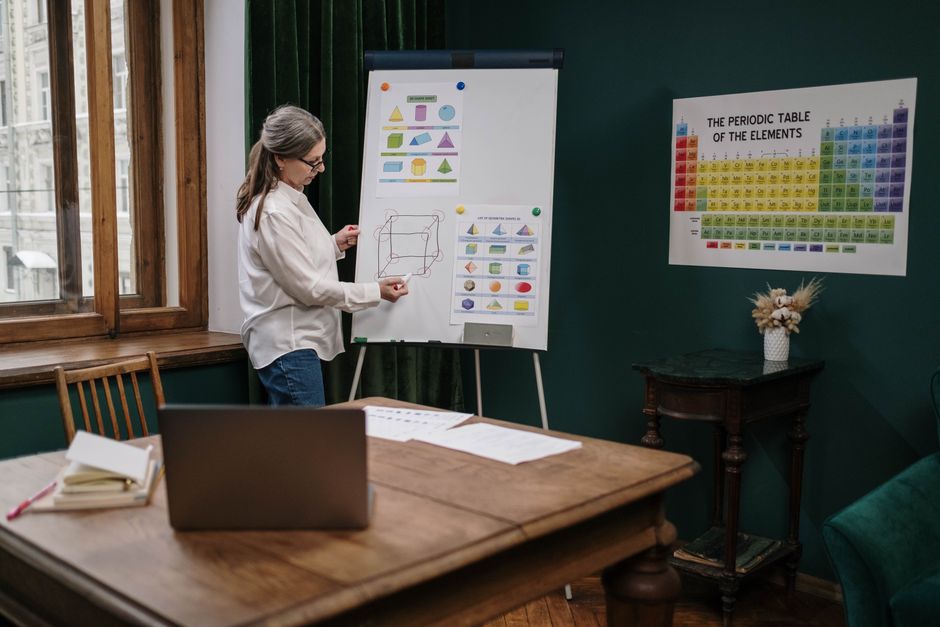
A printed periodic table of the chemical elements
Periodic Table Explained: Groups, Periods & How to Read ItThe periodic table lists all 118 elements in 18 groups and 7 periods. Learn how it is organised, what each tile means, and how to read groups and periods.5 sections · 5 FAQs
A laboratory balance used to weigh chemical samples in grams
Molar Mass: Definition and How to Calculate ItWhat is molar mass, and how do you find it? Add up the atomic masses in a formula to get grams per mole. Worked examples for H2O, glucose, Ca(OH)2 and NaCl.4 sections · 6 FAQs
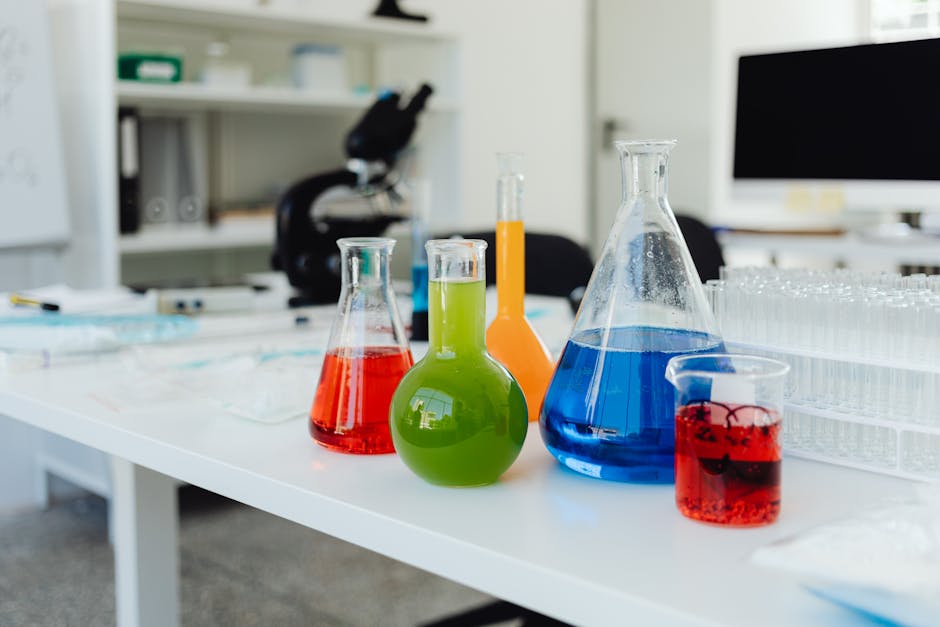
Beakers of coloured solutions illustrating chemical reactions
How to Balance Chemical EquationsLearn to balance chemical equations step by step using the counting method, with combustion and metal-acid examples plus the most common mistakes.3 sections · 3 FAQs
A model of an atom showing electrons orbiting the nucleus
Electron Configuration ExplainedUnderstand electron configurations: shells, s/p/d/f subshells, the Aufbau principle, Pauli exclusion, Hund's rule, noble gas shorthand and famous exceptions.5 sections · 3 FAQs
A close-up of the periodic table highlighting element groups
Periodic Trends ExplainedMaster the four main periodic trends — atomic radius, ionization energy, electronegativity and metallic character — with directions, reasons and examples.6 sections · 3 FAQs
An atomic model representing protons, neutrons and electrons
Atomic Number vs Atomic MassAtomic number counts protons; atomic mass averages isotope masses. Learn the difference, what mass number means, and how to use all three correctly.4 sections · 3 FAQs
Samples of metallic and non-metallic elements side by side
Metals, Nonmetals, and MetalloidsCompare metals, nonmetals and metalloids: physical and chemical properties, where each sits on the periodic table, and examples of everyday uses.4 sections · 3 FAQs
A molecular model showing atoms bonded by shared electrons
Valence Electrons ExplainedWhat valence electrons are, how to count them from group numbers or electron configurations, and why they control bonding and reactivity.3 sections · 3 FAQs
pH indicator strips showing a range of acidic and basic colours
pH and pOH ExplainedUnderstand the pH and pOH scales: the formulas pH = −log[H⁺] and pH + pOH = 14, worked examples, and why each pH step means 10× the acidity.4 sections · 3 FAQs
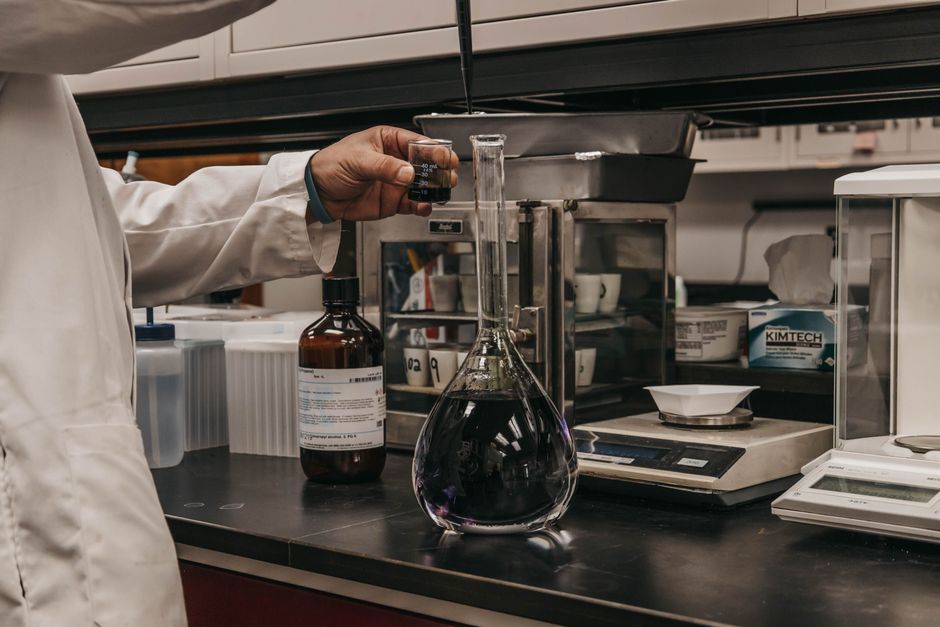
A volumetric flask used to prepare solutions of known concentration
Molarity and Dilution ExplainedLearn molarity (M = mol/L) and dilution (C₁V₁ = C₂V₂) with worked examples, lab-style problems and the unit mistakes to avoid.3 sections · 3 FAQs
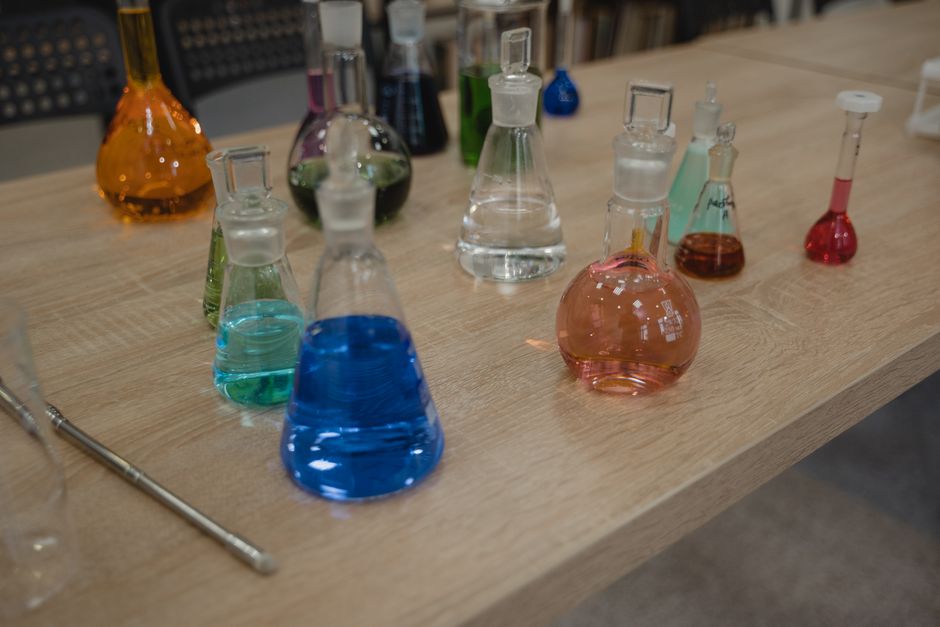
Laboratory glassware set up for a quantitative chemistry experiment
Stoichiometry Step-by-StepA clear method for stoichiometry: balance the equation, convert to moles, apply the mole ratio, convert back. Includes full worked examples.4 sections · 3 FAQs
A notebook page of handwritten chemistry formulas
Common Chemistry Formulas for StudentsOne-page reference of essential chemistry formulas: moles, molarity, dilution, pH, gas laws, percent yield and more — each with units and an example.5 sections · 2 FAQs
An atomic model of a nucleus surrounded by electrons
How to Find Protons, Neutrons, and ElectronsFind protons, neutrons and electrons from the periodic table: protons = atomic number, neutrons = mass number − atomic number, electrons adjust with charge.4 sections · 3 FAQs
The grid layout of the periodic table showing groups and periods
Groups and Periods on the Periodic TableGroups are columns sharing valence electrons and chemistry; periods are rows sharing shell count. Learn the named families and how to use both.3 sections · 3 FAQs
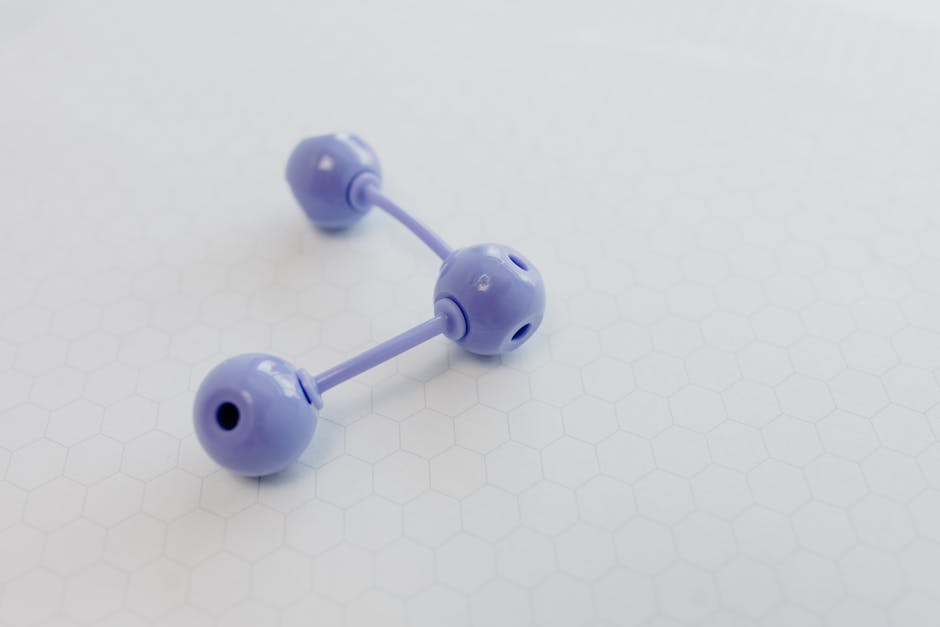
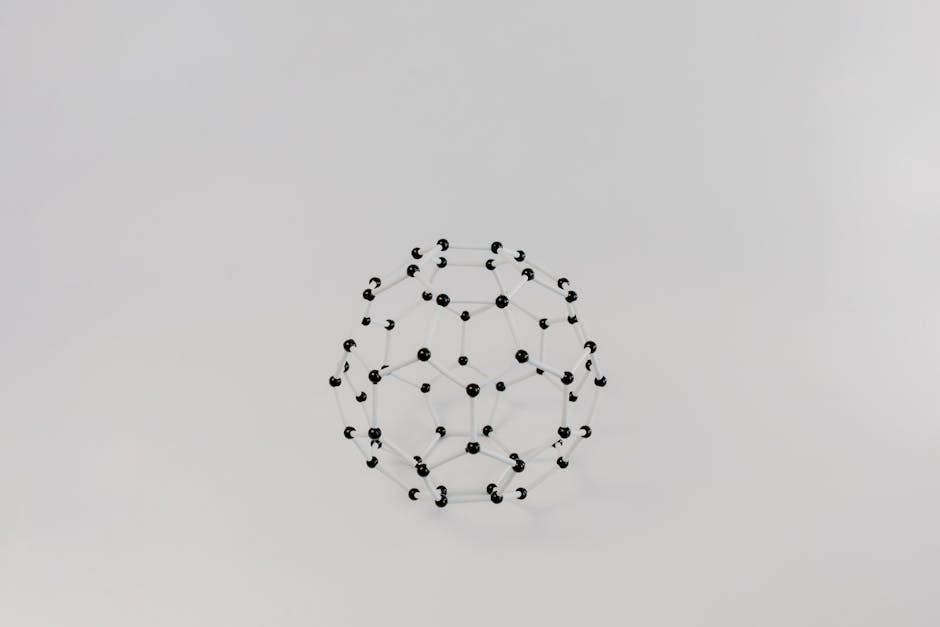
A ball-and-stick molecular model representing a chemical formula
How to Read Chemical FormulasDecode any chemical formula: element symbols, subscripts, parentheses, coefficients and hydrate dots — with H2O, Ca(OH)2 and CuSO4·5H2O examples.3 sections · 3 FAQs
An abstract representation of atomic nuclei and isotopes
What Are Isotopes?Isotopes are atoms of the same element with different neutron counts. Learn notation, why atomic masses are decimals, and real uses from dating to medicine.4 sections · 4 FAQs
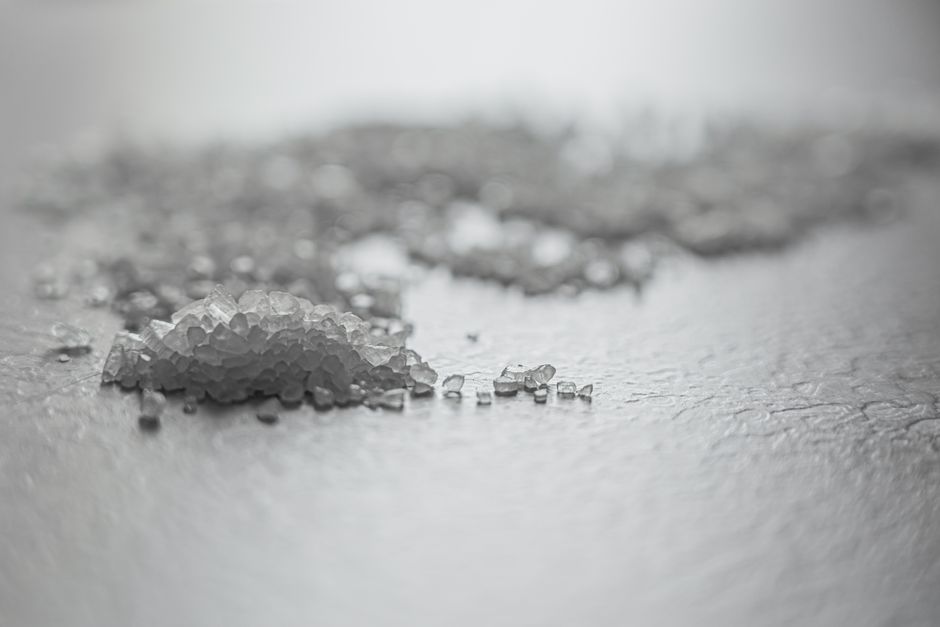
Macro photograph of salt crystals, a familiar ionic compound
What Are Ions?Ions are charged atoms formed by losing or gaining electrons. Learn cations vs anions, how to predict charges from the periodic table, and polyatomic ions.4 sections · 3 FAQs
Rust on metal, an everyday example of an oxidation reaction
Oxidation Numbers ExplainedLearn the oxidation number rules — free elements are 0, oxygen −2, hydrogen +1 — and use them to solve KMnO₄, SO₄²⁻ and more, step by step.4 sections · 3 FAQs
A reaction bubbling in a flask, illustrating reactants combining
Limiting Reactants ExplainedThe limiting reactant runs out first and caps the product. Learn the divide-by-coefficient method, theoretical yield and excess with worked examples.3 sections · 3 FAQs
Balloons filled with gas, illustrating gas pressure and volume
Ideal Gas Law ExplainedUnderstand PV = nRT: what each variable means, choosing the right R, kelvin conversions, worked examples, and when the ideal gas law breaks down.4 sections · 3 FAQs
A crystalline mineral structure formed by ionic bonding
Ionic vs Covalent BondsIonic bonds transfer electrons between a metal and a nonmetal; covalent bonds share them between nonmetals. Compare properties, examples and how to tell them apart.5 sections · 4 FAQs
A beaker of solution used to compare concentration measures
Molarity vs MolalityMolarity is moles per litre of solution; molality is moles per kilogram of solvent. Learn when each is used, why temperature matters, and how to calculate both.4 sections · 3 FAQs